Google Search Central published a blog saying platform properties in GSC have rolled out globally, and they also published new documentation with guidance on analyzing your social/video content performance.


Live from Momentic Studio, this news feed is curated by the Momentic team so you can stay up to date on LLMd, AI, search, SEO, GEO, AEO, AI search, frontier AI models, and relevant tools. Updated in real time.
Google Search Central published a blog saying platform properties in GSC have rolled out globally, and they also published new documentation with guidance on analyzing your social/video content performance.
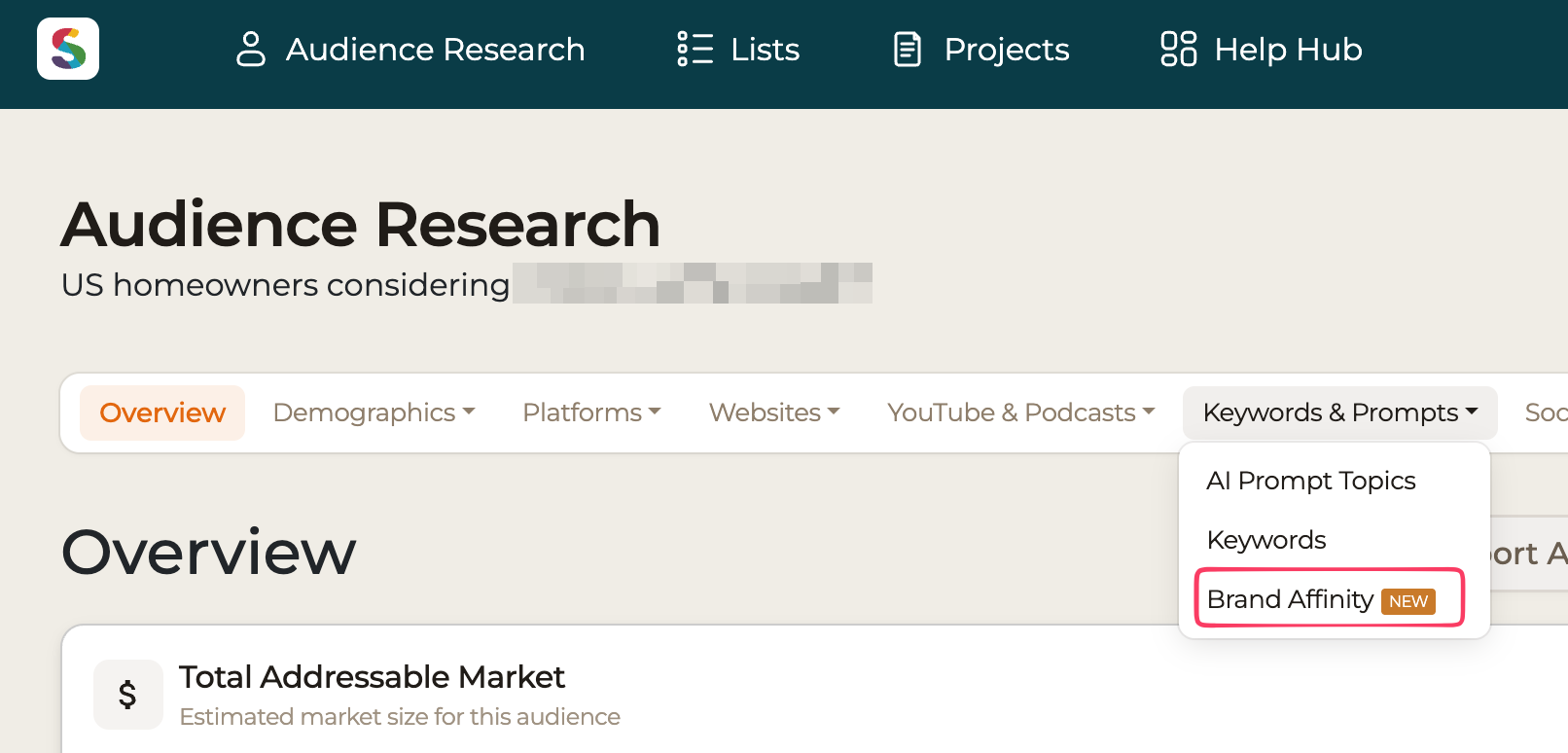
SparkToro has a new research report called Brand Affinity. It shows the companies, products, and brand names an audience is most familiar with and/or purchases from. Helpful for competitor research.
It's in the Keywords and Prompts dropdown.
Seer Interactive did a follow-up content freshness study one year after their original. Not surprisingly, content freshness still matters. But they add some helpful nuance and include a bunch of "here's how to put it into practice" type advice as well. They only looked at Gemini, ChatGPT, and Perplexity for this study. Here's a preview:
◦ In contrast, 42% of cited pages were *published* in the past year
So what you want is a collection of established, high-quality pages that are kept "reasonably fresh" (which varies by vertical, page type, and AI platform) for citation consistency over time.
YouTube is making it easier for creators to customize video thumbnail images with these updates:
Google added a new guideline to their review snippet documentation about fake and undisclosed incentivized reviews, and here it is:
> • Don't include fake or undisclosed incentivized reviews on your page or in your structured data markup. Examples include:
> ◦ Reviews that aren't based on a genuine experience of a product or service
> ◦ Reviews written in exchange for a benefit (such as money, discounts, vouchers, or free products) that don't clearly and prominently disclose the incentivization
There's a Meta AI app, and now it has agentic capabilities for stuff like planning, researching, making presentations, and completing tasks using connected apps.
Claude Opus 5 is here:
Yelp is licensing its reviews, ratings, photos & business details to OpenAI. Yelp branding/links will show when ChatGPT surfaces its info in responses.
Coming next: Yelp's "request a quote" feature will also be available so users can contact local providers for quotes without leaving ChatGPT.
I was reading a summary of a video where Cyrus Shepard (founder of Zyppy) talks about local brands in the context of Google/AI and this nugget jumped out:
Amazon deliberately writes vague shipping notice emails (e.g. "your health and wellness product has shipped") so Google can't scrape product purchase details from Gmail.
So the inverse would be recommended for a small/local business: make sure your emails include the types of product/service details you want your brand to be known for so Google can scrape it.
Because Google users who are opted in to Personal Intelligence will get personalized Google AI results, which includes Gmail inbox data.
Microsoft Clarity introduced topic classification to AI citation grounding queries.
Helpful to know that Topics in Clarity vs Bing WMT AI Performance report work differently:
Another important topic distinction:
Query Topics are in Clarity's AI Citations dashboard, and they include topic-level performance metrics (citation count, share of authority), you can filter by topics, and you can export topic-level data.
Google Merchant Center is rolling out 'Ask Advisor' AI-generated summaries and chat - I'm not seeing it for every GMC account we have access to yet, but here's what it looks like when it does show up:

Google "polished and clarified" their guide to optimizing your crawl budget, mostly to improve clarity. Barry Schwartz combed through the changes and highlighted some good ones:
> Here are some new lines added:
> • "Every site starts with the same default, conservative crawl capacity limit. If there is demand to crawl more and the site remains healthy, Google's systems will automatically adjust this limit over time."
> • "For Googlebot, demand varies based on a site's size, update frequency, page quality, and relevance, compared to other sites. The primary factors you can influence are."
> • "While each crawler has a different crawl demand, the crawl capacity limit is shared across all crawlers. This means that high demand from one crawler can reduce the capacity available for others."
> • "Improve loading speed: Optimize your server response times and resources to make pages load faster."
> • "Use HTTP caching: Support 304 (Not Modified) HTTP status codes. If a page hasn't changed since Google last crawled it, returning a 304 code tells Google to reuse the cached version, saving your server bandwidth and resources."
That second bullet point is worth reading the whole section:
Additionally, site-wide events like site moves may trigger an increase in crawl demand in order to reprocess the content under the new URLs.
Google released 3 new AI models:
3.5 Flash Lite is rolling out for Google Search (but they didn't get specific about if it's being used in AIO, AI Mode or both, and they said it's good for agentic search which they announced in May at I/O).
Ends with a promise that Gemini 3.5 Pro is coming soon
Google published research on how they're using Cluster Detection (behavioral patterns) and Synthetic Content Rating (semantic patterns) to purge scaled AI slop from YouTube.
Seems like they don't want to accidentally take down human creators who may or may not use AI tools, but it's good to keep in mind and maybe do things to avoid sending the wrong kinds of signals:
The research paper only talks about online video platforms but it's not a stretch to consider how Google might apply this type of semantic classification/cluster analysis to web content too. Low-effort AI-based content scaling: just don't!
Here's a link to the abstract where you can download the PDF report
Top stories are rolling out in AIO for logged-in Google users on mobile. If users have added Preferred Sources they will be highlighted here.
Google updated the FAQ section of the 'Syncing your products' GMC Help documentation to clarify what to do during the upcoming Content API --> Merchant API migration concluding by August 18.

A really helpful Search Console insight was shared in the July 16 episode of Search off the Record. It's at 17:49 in the video if you want to skip straight to it and here's the gist:
Google renamed the user agent name to go along with the NotebookLM --> Gemini Notebook name change.
Old: `Google-NotebookLM`
New: `Google-GeminiNotebook`
Google has renamed NotebookLM to Gemini Notebook. (Not to be confused with Notebooks in Gemini)
More is changing besides the name:
Google announced connected apps in AI Mode are rolling out now - the first three are Instacart, Canva, and YouTube Music.
They say they're working with "a range of partners" and will be adding more apps soon.
ChatGPT increased the character limit for custom instructions from 1500 to 5000 characters. Custom instructions are used to customize ChatGPT's response style and behavior.
Starting in September 2026, Google is going to combine all the Google Merchant Help Center documentation into a single set of Shopping policies, for both free listings and ads.
When a policy applies only to Shopping ads, it'll be labeled.
ChatGPT updated their search tool:
Available on all plans globally
2 new image-related Google Search announcements:
New home for Google Images: images.google.com with new features for signed-in users:
Nano Banana is coming to AI Overviews (already available in AI Mode). Rolling out over the coming weeks.
AI performance insights are rolling out in Google Merchant Center Analytics. Here's the help document with details on the metrics, scope filters, and "optimization opportunity scorecards".
I checked a bunch of the GMC dashboards we have access to and found it in one of them, so keep your eyes peeled!
When available it's found under Analytics → Products

Apparently there's a hack you can use to force your platform performance report (for YT, insta, FB, or X) in GSC to show generative AI performance: just append /ai to the report URL.
But it doesn't work on regular GSC performance reports (I tried it). If you've got any of your social platforms hooked up in GSC already, give it a shot!
OpenAI is sunsetting their ChatGPT Atlas browser because the new ChatGPT desktop app has a built-in browser. Atlas will be deprecated August 9, 2026 (it arrived on the scene in October 2025). They also updated their Chrome extension so you can use ChatGPT directly in Chrome's sidebar.
But wait there's more: ChatGPT Work is a new agent inside ChatGPT that can do stuff for you, not just answer questions. It's powered by GPT-5.6. Lots of use case examples in the announcement.
> ChatGPT Work starts rolling out today on web and mobile, beginning with Pro, Enterprise, and Edu users and expanding to Plus and Business users over the next few days. The updated ChatGPT desktop app is available globally today for Mac and Windows, with Chat, Work, and Codex available to users on every plan, including Free.
Anthropic created a "reflection dashboard" (now in beta) to let you track, visualize, reflect, and refine how you use Claude:
Incognito chats are excluded from the reflection dashboard, as are files from connected tools.
To use it, memory has to be turned on. You can try it out by going to Claude Settings. Coming next for Cowork conversations.
GPT-5.6 is here, and there are 3 models in this family:
The announcement includes a video, and a ton more detail about each model.
Microsoft Clarity now offers Topic Insights (in beta) under the AI Visibility dashboard.
Ask YouTube is now available on desktop - you have to be signed in and aged 13 or older. Standard YT search results are still available, you'll just see a new :sparkles:Ask YouTube button in the search bar
DuckDuck Go announced it now lets you watch YouTube ad-free.
Google Merchant Center Next replaced Google Merchant Center in March 2023.
Now they are switching it back to Google Merchant Center & scrubbing "next" from GMC branding & documentation. Just a name change, no functionality changes.
GPT-Live is rolling out now:
> Starting today, when you tap the Voice button to talk with ChatGPT, you’ll get an improved experience powered by GPT‑Live—with more natural conversations, smarter answers, better listening, and visual responses.
Cloudflare and OpenAI paired up for a research pilot. The goal is to find out how websites in Cloudflare's network (about 20% of the total) can help AI search engines discover & index web content better.
Google added *category* to merchant listing structured data:
> *What*: Updated the Merchant listing documentation to detail how the `Product.category` property can be used with both `Text` and `CategoryCode` types. This aligns with the Google Merchant Center feed specifications for the product_type and google_product_category attributes.
>
> *Why*: To help merchants provide both merchant-defined and Google-defined category information within their schema.org markup, enhancing product information for Google Search and Shopping.
Google also clarified how to specify sale price effective dates in Product structured data:
> *What*: Added a new section on "Sale duration" to the Merchant listing guide. This explains how to use the `validFrom`, `validThrough`, and `priceValidUntil` schema.org properties to set the effective range for sale prices, including best practices and examples for placement on either `Offer` or `PriceSpecification` nodes.
>
> *Why*: This aligns schema.org usage with the Merchant Center feed attribute sale_price_effective_date, providing clear instructions and best practices for merchants using structured data.
Unconfirmed experiment people are noticing on Google SERPs: search result links use google.com/goto as a passthrough URL before redirecting you to the actual web page you wanted.
Alex Greenland posits it's to make it harder for AI scrapers to grab links from SERPs and that sounds reasonable to me. Haven't seen this in the wild myself but good to be aware of in case you come across it or a client brings it up!
Potentially big issue for those who use the Google & YouTube Shopify app to sync products from Shopify to GMC. Because the Google Merchant API is replacing the Content API on 8/18, when you migrate the app it will change all your product IDs. That means all historical data will be gone.
There's a workaround (if you do it before August 18), and also the Google Ads Liaison has said "we're looking into this" so it's possible Google will come up with a solution.
Wil Reynoldes/Seer shared an open-source GEO strategy tool. It's a 2x2 matrix for collaborative "thinking through" of all the various AI visibility levers to help everyone understand the speed, risk, impact, and "doableness" of each tactic
Google Search Console update: new documentation on platform properties in GSC
You can add a supported property on the Search Console welcome screen, or with the property selector dropdown in the sidebar → Add property.
Supported platforms: YouTube, Instagram, TikTok, X
It's rolling out gradually, but once you have access you can view reports to see how your other platform content performs in Google Search/News/Discover (if it appears in those places).
> Platform properties only show how your content performs on Google surfaces. They don’t track when people see your content on the platform itself (for example, they won’t show how many times your video appeared on TikTok).
You'll be able to find total clicks, impressions, CTR & average search position (same metrics as the standard Performance report).
> To help you understand your metrics, here are some examples of how Search Console handles specific types of platform property content and search interactions:
> • Instagram stories:When your Instagram stories show up in Google search they’re counted as impressions. If a story appears in search results and a user clicks it, it’s counted as a click.
> • Videos played on Google:When your video content appears in search results or Discover, it counts as an impression. If a user clicks it, it counts as a click. Note that even if that click opens the video inside the Google viewer, a click will be added in Search Console.
Bill Hartzer made a free CLS tool to make it faster & easier to diagnose what's causing the problem after PageSpeed insights shows a poor CLS score
Need some data to show that improving CWV improves business outcomes? John Mueller shared this case study on LinkedIn.
Cloudflare added more nuance to their AI bot controls to give users more ways to manage AI traffic:
The options across all 3 use cases are: Allow, Block, or Block on pages with ads. The reasoning is that ads are meant to be seen by people, and this monetization funds the business that publishes the content.
Starting September 15, 2026 there will be new default settings for these controls:
They're also creating bot management capability based on content use, with three settings:
These content use values can be combined with the bot classifications to refine the rules to your liking.
Cloudflare is currently testing a new `use` signal that will live in your robots.txt but it will only signal a preference, it won't block things.
There's more in this article too, about verified bots and "transitive trust" and things for the future they are thinking about.
Google updated AMP (accelerated mobile pages) documentation yesterday:
> *What*: Simplified our AMP documentation by removing outdated references to the AMP viewer, AMP Cache, and signed exchange.
> *Why*: Starting today, Google Search is updating how it connects users to AMP pages, and will now take users directly to the publisher's AMP host pages. This change simplifies and reduces maintenance efforts for publishers who are creating AMP content, as they no longer need to update the AMP cache or configure signed exchanges. AMP content will continue to rank just like any other web page.
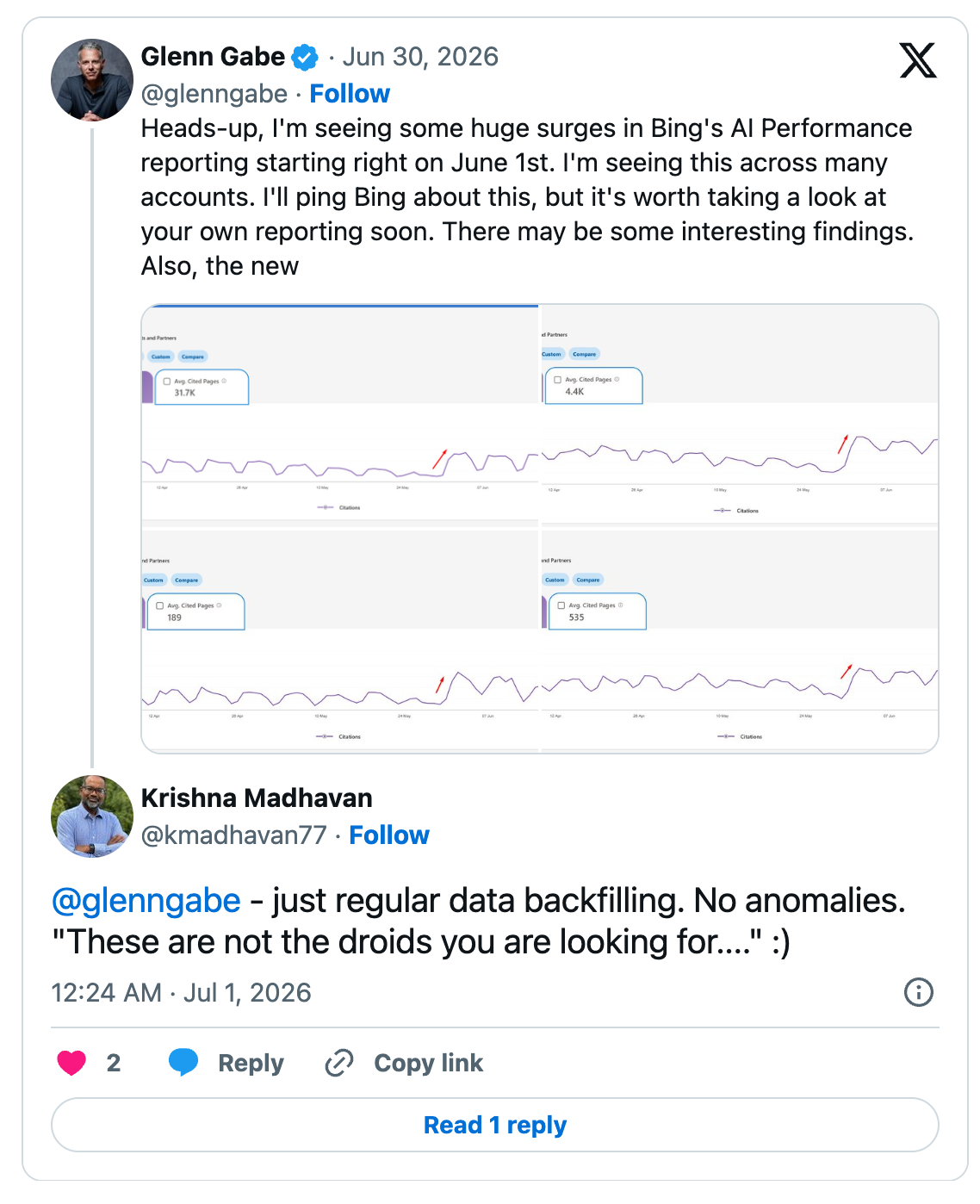
If you noticed an uptick in total citations/avg. cited pages in Bing WMT's AI Performance report around the beginning of June (I sure did, across multiple accounts) I'm sorry to say it's not because your website started getting more AI visibility. :pensive:
Microsoft Bing's Krishna Madhavan said it's just data backfilling. Which makes sense since there's been a "heads up" since day one in this report that "Results may be refined as additional data is processed"
In a separate reply he clarified: "we are constantly backfilling data. This is not about completeness. Just regular data processing pipeline artifact."
And in another reply: "trends is what I would focus on"
Would've been nice to get an annotation or alert inside Bing WMT instead of a month-delayed acknowledgement, but at least we know now. I guess put a sticky note on your monitor because there isn't a way to add your own annotations in this report. Thank you to Barry Schwartz for summing all this up!
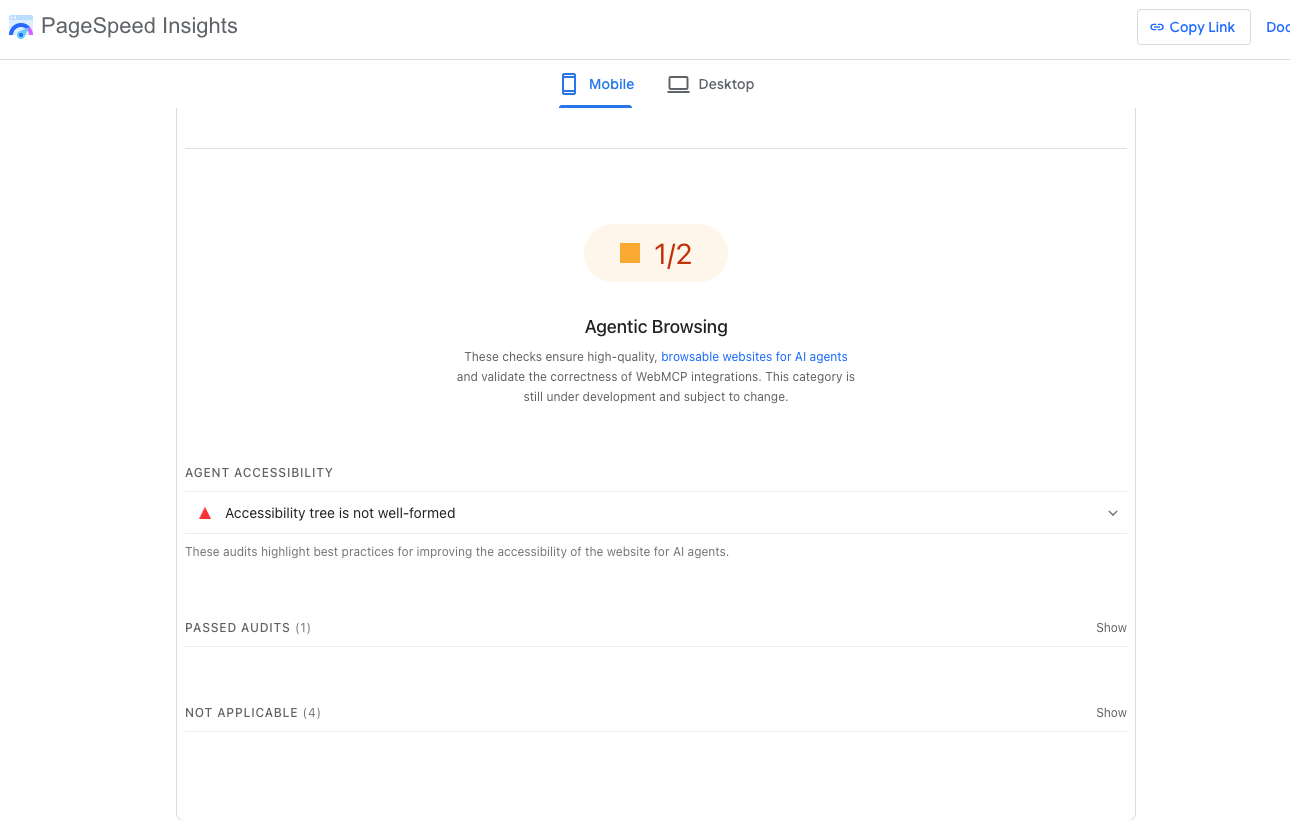
Today I noticed PageSpeed Insights has an Agentic Browsing section and there's documentation for Lighthouse agentic browsing scoring, too.
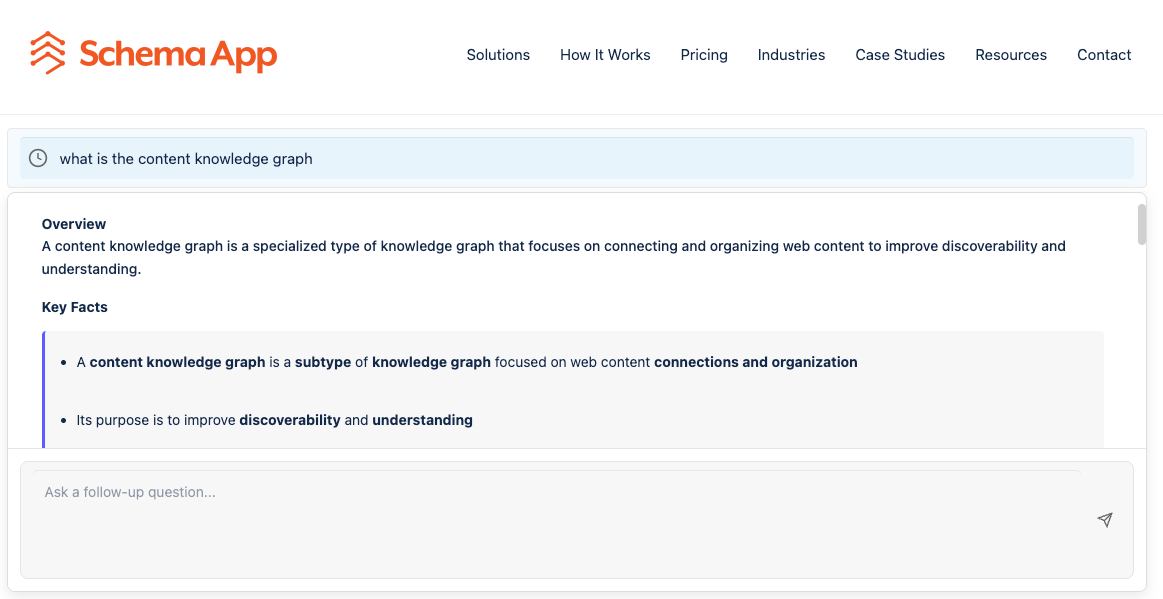
Schema App has a new tool called Knowledge Assistant. Haven't tried it, but if it works as well as they describe, it sounds really helpful.
There's a video on the page and a link to try a demo. I tried it out (I assume) in SchemaApp's own site search tool and it's pretty okay. It takes a little bit to give you an answer, which ends up being an overview summary statement, list of key facts, and previews of web pages it drew information from. Cool to know about.
Also Claude Sonnet 5 is now the new default model for Free & Pro (upgrade from Sonnet 4.6). They say it hallucinates less, isn't as sycophantic, and has more safeguards on by default.
Fable 5 in Claude is available again as of today - the announcement contains lots of details on new safeguards, a new collaborative framework for fixing jailbreaks, and more collaboration with the feds.
> Fable 5 will be available starting Wednesday, July 1, to users globally on the Claude Platform, Claude.ai, Claude Code, and Claude Cowork. For Pro, Max, Team, and select Enterprise plans,1 Fable 5 will be included for up to 50% of weekly usage limits through July 7, after which it will be available via usage credits. We will re-enable access on AWS, Google Cloud, and Microsoft Foundry as quickly as possible.
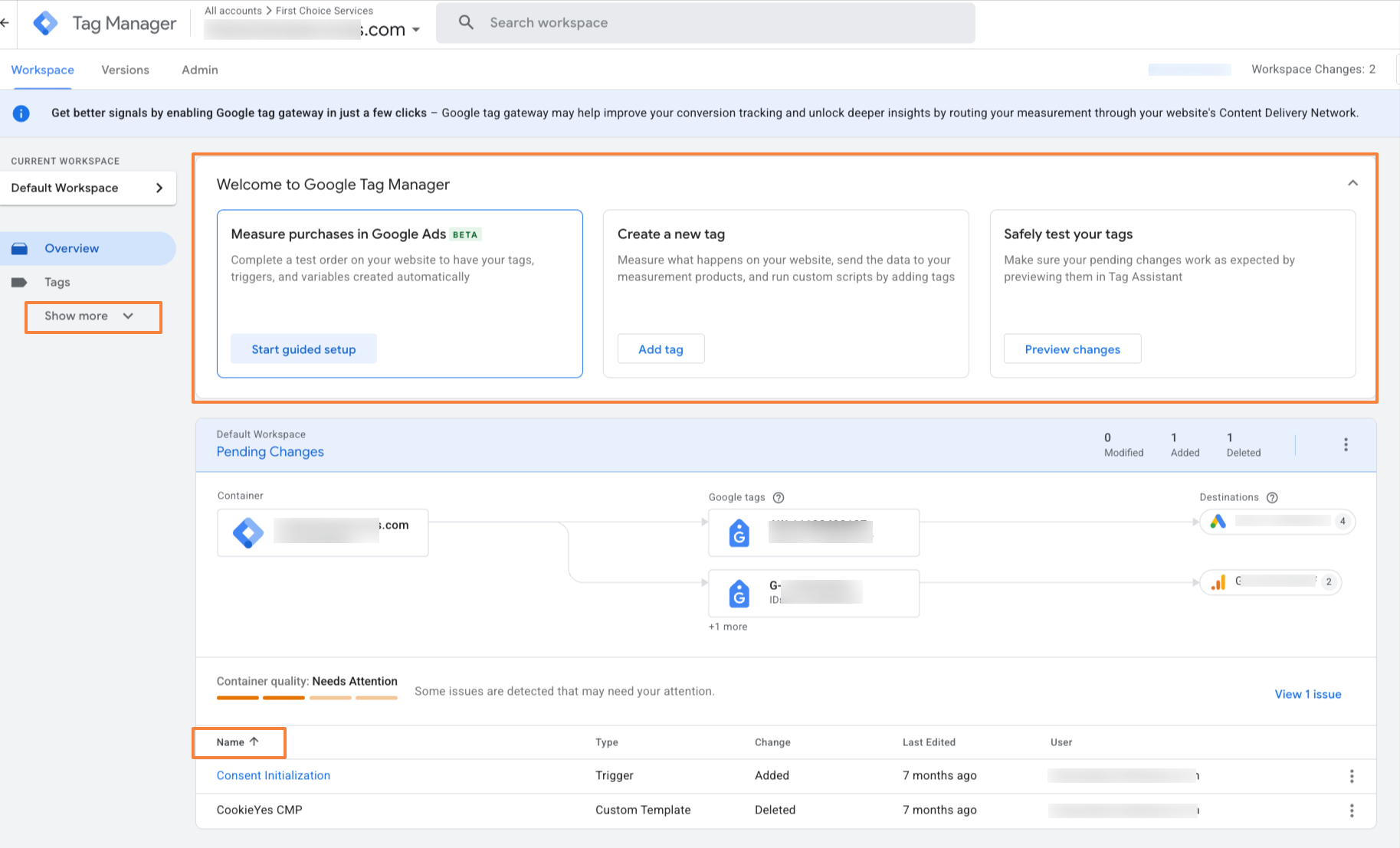
You might have noticed that Google Tag Manager overview got a new look. Apparently these UI updates are happening now because of the previously announced GTM + Google Tag integration coming in September 2026.
Here's how the GTM workspace overview has changed:
◦ Some features (like Triggers and Variables) are now hidden behind 'Show more' in the left nav
I checked on a bunch of GTM containers we have access to and these changes are only in some of them so it's still rolling out.