Live AI search news feed
Live from Momentic Studio, this news feed is curated by the Momentic team so you can stay up to date on AI search, SEO, GEO, AEO, AI search, frontier AI models, and relevant tools.
Shopify had an outage this morning starting around 9:30am eastern - as of around 11:30am eastern they said it's been resolved and they're continuing to monitor.
- It affected merchants trying to access Shopify admin & Retail POS
- It affected customers trying to access storefronts & checkouts
- Access to support also impacted
Similarweb data is now available in Perplexity:
> • The *native integration in Perplexity Computer* brings Similarweb data into Computer’s workflows out of the box.
> • The *official Similarweb MCP connector* is the most direct path for existing Similarweb customers. Connect your API key once, and the data included in your plan becomes available in your Perplexity workflows.
Google rolled out a new set of optional "conversational attributes" for GMC product feeds. They're meant to help products surface in AI Mode as well as enhance traditional search experiences.
> The following conversational attributes are available as part of the Google Merchant Center product data specification:
> • Question and answer `[question_and_answer]`
> • Document link `[document_link]`
> • Related product `[related_product]`
> • Item group title `[item_group_title]`
> • Variant option `[variant_option]`
> • Popularity rank `[popularity_rank]`
> You can add these attributes directly into your existing product data setup by either using a supplemental data source (recommended) or by adding them to your primary data source. You can also use the Merchant API to submit these attributes. Including them won't impact the approval status of your existing products. Use these attributes to convey descriptive information about your products, including variant data.
> Note: If you already submit specific details in the description `[description]`, product highlight `[product_highlight]` or product detail `[product_detail]` attributes, you don't need to duplicate that data again in the conversational attributes.
The documentation also has a table with "how to use" and examples for each attribute, plus a table with an example product and all the attribute values for it.
OpenAI announced new plugins for Codex as well as Sites (currently in preview for biz/enterprise customers).
6 new role-specific plugins (with more on the way):
- Data analytics
- Creative production
- Sales
- Public equity investing
- Investment banking
(next batch will have Marketing Strategy, Strategy Consulting, Legal, Corp Finance & Private Equity Investing)
Codex can now create and share interactive, hosted websites and apps:
> Sites are a new kind of canvas for your ideas. Codex can take your ideas, analysis, and plans and turn them into dashboards, planners, review workspaces, project boards, galleries, and lightweight tools. Today, sites can be shared with anyone in your workspace via URL, giving teams a shared place to explore work, contribute input, track progress, and make decisions together.
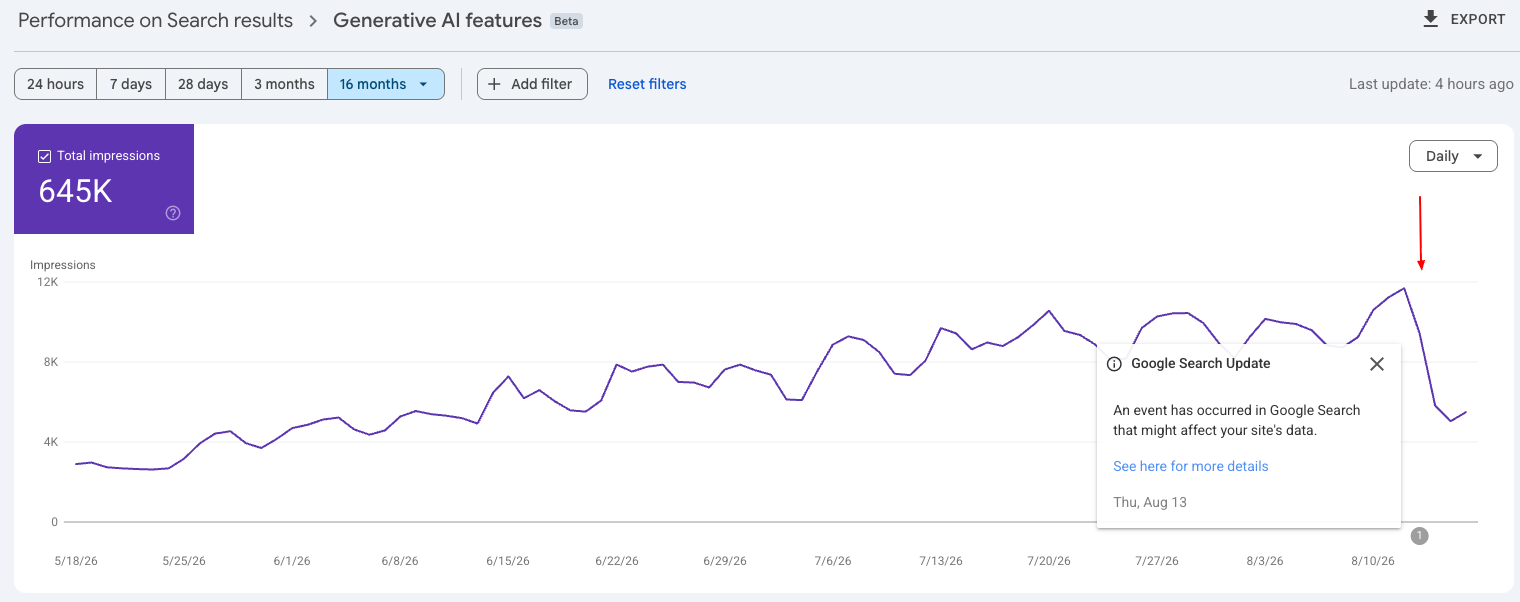
Wow! I never thought this would happen. Google is rolling out Generative AI data in Search Console, including dedicated reports for Search and Discover.
Right now they're only rolling out to a subset of websites for thorough testing and feedback, but eventually they'll be widely available. Here's what they'll have:
- *Impressions:*How often URLs from your site appeared in generative AI features in Search and Discover.
- *Pages:*Check which URLs appeared within AI features.
- *Countries:*Understand your visibility on a country basis.
- *Devices:*Identify the devices people are using when seeing your website (available for Search results).
- *Dates:*Monitor your performance over time with hourly, daily, weekly, and monthly granularity.
There is new help center documentation for generative AI performance reports also. I checked and I can't see the new reports in any of the GSC accounts I have access to - hopefully testing will go fast!
Microsoft launched "Web IQ", calling it a search engine for AI systems:
> Where Bing was built to help people search the web, Web IQ is built to help AI agents find the right information, turn it into useful evidence, and use it inside reasoning. Unlike other APIs that layer on top of fragile infrastructure, Web IQ is a new kind of search system, one that delivers the right evidence with the speed, quality, and efficiency modern agents require.
>
> It builds on years of learning from Bing, but it required a major ground-up re-architecture to meet the demands of agentic workloads.
There are a bunch of different tools that assign & track search ranking volatility scores. Barry Schwartz made a tool that puts all of them in the same chart & you can choose exactly which ones you see.
Common Crawl published an AI Visibility Audit guide:
> The guide walks through how CCBot crawls the open web and publishes the archive that helps train modern LLMs, how harmonic centrality in the Common Crawl Web Graph sets crawl priority, why CDN and WAF defaults now silently block AI crawlers and training data crawlers, and why AI still leans toward English, with the English share of the latest crawl at roughly 41 percent.
Here's the short announcement. Here's the guide.
In case you aren't holding enough variables in your head already, now there are "ChatGPT Core Updates" to monitor.
This is not an official term, but Sistrix evaluated 38 daily samples of 100K ChatGPT responses (total of 3.8M responses & 100M source mentions) and observed two "update events" in May.
Here's their caveat: "We are measuring a correlation. The model identifier switched on May 23 from “GPT-5 mini” to “GPT-5.5”, and simultaneously the citation distribution shifted. Whether the model change alone was the cause, or whether the retrieval or prompt layer was also changed in parallel, cannot be determined from the outside."
Also, they only measured German-language prompts/responses. But official or not, I'm glad they're systematically measuring output and sharing what they see, since ChatGPT isn't announcing anything. Article has more context and analysis of winners/losers.
If you're hiring or looking for work, ChatGPT wants to be part of the process:
> ChatGPT can now help with more of the job search process, from finding relevant live roles to tailoring a resume for a specific opportunity.
>
> When you search for jobs, ChatGPT can surface live listings and freelance opportunities from sources like Indeed, Upwork, Appcast, and across the web. Results are personalized using your experience, skills, and goals to highlight roles that may be a strong fit. You can follow links to apply directly on the source sites.
>
> You can now also upload or create a resume in ChatGPT, tailor it to a specific role, and download it in a polished, professional format.
>
> Availability:
> • Job search: Available to users in the U.S. on Free, Go, Plus, and Pro plans
> • Resume formatting: Available in English globally on the web for all plans
If you have job listings online, make sure they're on web pages AI crawlers can access to maximize discoverability!
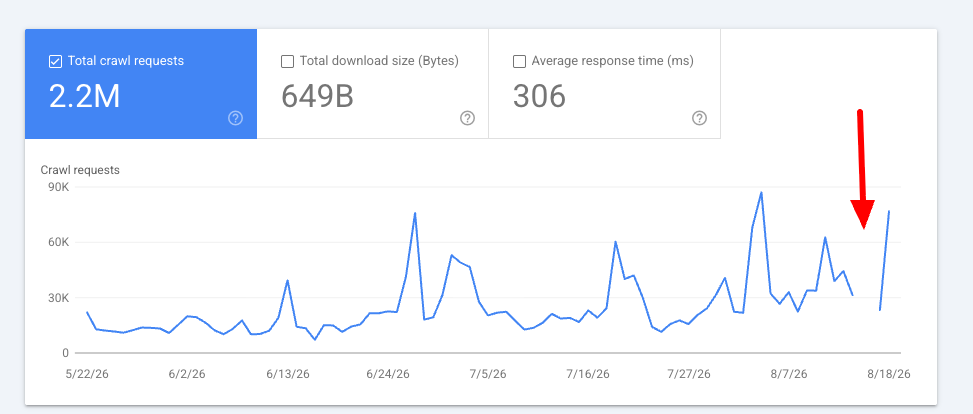
The May 2026 core update has wrapped - it took almost 12 days (11 days, 21 hours if you're counting). Barry Schwartz was right: he reported extra ranking volatility over the weekend (continued today as well) and predicted it was the 'one last push' before the update completed.
Zoom has a new product called ZoomMate, an "AI teammate" that uses conversational context and connected tools to do agentic stuff. It costs $20/month per user.
gs location changer Chrome extension allows you to change your location in search - https://chromewebstore.google.com/detail/gs-location-changer/blpgcfdpnimjdojecbpagkllfnkajglp?hl=en-US
"Organize my files" in Google Drive is out of beta and rolling out to Google Workspace plans.
> Gemini can help you organize your Drive by providing suggestions of where to move loose files based on your organizing structure and strategies. Users can access this view through a dedicated entry point titled “Suggest File Moves” within My Drive and parent folders. The dedicated interface displays recommendations divided into two sections: moving files to existing folders, and creating new folders for related file groupings. End users can review these recommendations before any files are relocated.
Asana acquired a no-code AI workflow platform (StackAI) as they aspire to make Asana "the operating system for human-agent teams"
Google published a new page in Chrome for developers documentation about *llms.txt*, calling it "an emerging convention used to provide machine-readable summary of a website's content, specifically designed for LLMs and AI agents"
Apparently Bloomburg got a leaked sneak peek at how Siri will look in iOS, which is coming mid-September. But the Bloomburg article is gated so we get this ad-heavy CNET rewrite.
- Siri will be based on Gemini technology
- Dynamic Island: a wide, pill-shaped area at the top of iPhone home screen (14 Pro and newer) which is where you can see all the AI stuff at a glance (system alerts, apps running in the background, delivery tracking) and launch Siri
- Search or Ask field where you can choose AI agents from a drop-down menu
- Dedicated Siri app with functions similar to Gemini
- Siri integrated into camera app for search (like Google Lens)
- Many AI queries will get answered on your device, less reliant on cloud & external data centers
Chris Long (co-founder of Nective, an SEO agency) published an "AI Instruction" page on their website (linked from the footer) and found that ChatGPT was using/citing the page within 48 hours. (he also shared receipts) He looked for other agencies that had something similar and found those were getting cited too (SEER is a standout example).
He shared his findings on LinkedIn & the comment thread is great:
- Marie Haynes pointed out that calling it "AI Instructions" could be interpreted as manipulation which goes against the Google spam policies now.
- He & Wil Reynolds both agreed and said they'd test it again without including "instructions" (SEER took their page down for now)
- Someone said it sounds similar to the Grounding Page concept that Hanns Kronenberg came up with and is documenting. He said they're seeing LLMs pick up the info and that the point isn't manipulation/optimization but to prevent entity confusion by making facts explicit, stable, and machine-readable.
No conclusion, just cool to see people testing things out and sharing what they learn. As a human I think this guy's grounding page is a refreshing read: no hype, just facts.